Introduction
Fluorinated Ethylene Propylene (FEP) occupies a practical middle ground in the fluoropolymer family: it delivers chemical resistance, thermal stability, and electrical insulation performance comparable to PTFE, but unlike PTFE, it is melt-processable. This means FEP can be extruded, injection molded, and applied as a dispersion coating using conventional thermoplastic processing equipment — capabilities that PTFE does not offer without specialized techniques.
For procurement teams and engineers, FEP is often the material of choice when the application requires PTFE-like performance but the processing method demands melt processability. FluorinChem supplies FEP in two forms: FEP Resin (pellets) in four MFR-graded variants, and FEP Dispersion SF-221 for coating applications. This article examines FEP's material properties, compares the four resin grades, and outlines the factors buyers should evaluate when specifying FEP for wire insulation, tubing, films, or coatings.
What Is FEP Fluorinated Ethylene Propylene?
FEP is a copolymer of tetrafluoroethylene (TFE) and hexafluoropropylene (HFP). The HFP content introduces a pendant trifluoromethyl group into the polymer chain, which disrupts the crystalline structure enough to lower the melting point to approximately 265°C — well below PTFE's 327°C melting point. This lower melting point, combined with a manageable melt viscosity, is what makes FEP melt-processable on standard thermoplastic equipment.
FEP retains the carbon-fluorine bond structure that gives fluoropolymers their exceptional chemical inertness, thermal stability, and low surface energy. The material resists virtually all chemicals except molten alkali metals and a few rare fluorinating agents. It maintains useful properties across a continuous service temperature range of approximately -200°C to 200°C.
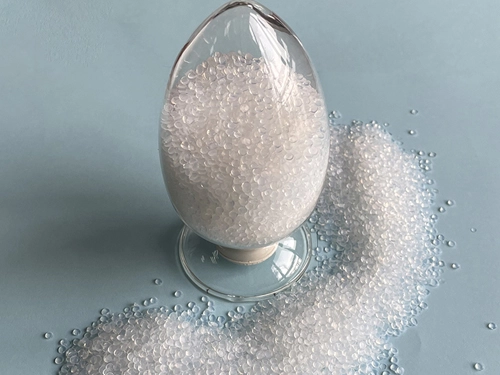
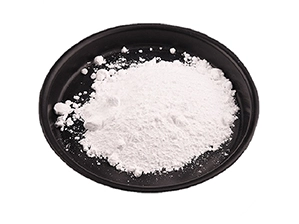
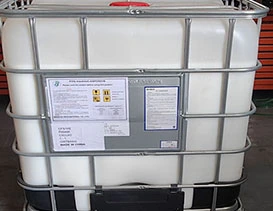
FluorinChem offers FEP(Fluorinated Ethylene Propylene) in two primary forms. FEP Resin is supplied as pellets in four grades — SF-211, SF-212, SF-213, and SF-214 — classified by melt flow rate (MFR) from 15-32 g/10min down to 0.8-2.0 g/10min. FEP Dispersion SF-221 is a liquid dispersion formulated for coating and impregnation applications.
Key Features and Advantages
Melt Processability: The defining advantage of FEP over PTFE is its ability to be processed on conventional thermoplastic equipment. FEP can be extruded into tubing, wire insulation, and films; injection molded into complex components; and applied as a dip or spray coating from dispersion form. PTFE, by contrast, requires compression molding or paste extrusion — methods that are slower, more equipment-specific, and unsuitable for complex geometries.
Excellent Electrical Insulation: FEP has a low dielectric constant (2.15 at 1 MHz) and low dissipation factor (7.0 x 10⁻⁴ at 1 MHz), making it a preferred insulation material for high-frequency wire and cable applications. Its dielectric properties remain stable across a wide temperature range — a critical requirement for aerospace, telecommunications, and data transmission wiring.
Chemical Inertness: FEP resists acids, bases, solvents, and oxidizing agents across a wide temperature range. This chemical resistance makes FEP tubing, linings, and coatings suitable for chemical processing equipment, pharmaceutical fluid handling, and laboratory applications.
Thermal Stability: With a melting point of 265±10°C and a continuous service temperature up to approximately 200°C, FEP provides reliable performance in high-temperature environments where commodity thermoplastics would degrade. The material also performs at cryogenic temperatures without becoming brittle.
Transparency: FEP is optically transparent, making it suitable for applications where visual monitoring of fluid flow or process conditions is required — such as transparent tubing, sight glasses, and protective films.
Non-Stick and Low Friction: FEP has low surface energy, providing non-stick and low-friction properties similar to PTFE. This makes FEP films effective as release films in composite manufacturing, molding, and heat-sealing applications where material adhesion to the film surface must be prevented.
UV and Weather Resistance: FEP resists ultraviolet radiation and weathering without degradation, supporting long-term outdoor and exposed applications such as solar panel encapsulation and architectural films.
Low Permeability: FEP provides good barrier properties against gases and moisture, relevant for packaging and containment applications where permeation control is important.
Main Applications
Wire and Cable Insulation: FEP resin is extruded as insulation for high-performance wiring in telecommunications, aerospace, data centers, and industrial applications. The combination of excellent dielectric properties, thermal stability, and flame resistance makes FEP a standard insulation material for plenum-rated building cables, coaxial cables, and hook-up wire in electronic equipment.
Tubing for Chemical Processing: FEP tubing is used in chemical processing, pharmaceutical manufacturing, and laboratory applications where chemical resistance, transparency, and a smooth non-stick inner surface are required. FEP tubing handles aggressive fluids that would attack commodity plastics.
Release Films for Composite Manufacturing: In aerospace, automotive, and industrial composite manufacturing, FEP films serve as release sheets between composite layups and mold surfaces. The non-stick surface prevents adhesion while withstanding the elevated temperatures and pressures of composite curing processes.
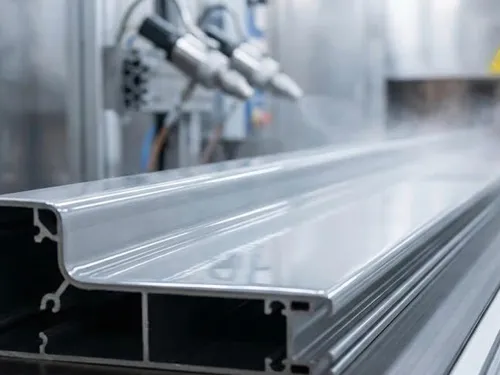
Coatings and Linings: FEP dispersion (SF-221) is applied as a coating to metal substrates, fabric, and other materials to provide chemical resistance, non-stick properties, and easy-to-clean surfaces. Applications include cookware coatings, chemical processing vessel linings, and industrial roll covers.
Solar Panel Encapsulation: FEP films are used in photovoltaic module encapsulation due to their UV resistance, transparency, and weatherability. The film protects solar cells from environmental degradation while maintaining optical transmission efficiency.
Injection-Molded Components: FEP pellets can be injection molded into valves, fittings, and pump components for chemical handling equipment where both chemical resistance and the ability to produce complex geometries are required.
How to Choose: Key Factors
MFR Grade Selection: The four FEP resin grades (SF-211 through SF-214) differ primarily in melt flow rate, which determines processing suitability. Higher MFR grades (SF-211 at 15-32 g/10min) flow more easily and are suited for thin-wall extrusion such as wire insulation and small-diameter tubing. Lower MFR grades (SF-214 at 0.8-2.0 g/10min) have higher melt viscosity and are better for thicker-walled products such as pipe linings and large-diameter tubing where dimensional stability during processing is important. Match the MFR grade to your processing method and product geometry.
Processing Method: Determine whether the application requires extrusion (wire insulation, tubing, film), injection molding (fittings, valves), or coating application (dispersion). For extrusion and injection molding, FEP resin pellets are the appropriate form. For coating applications, FEP Dispersion SF-221 is required. The processing method determines both the form and the optimal MFR grade.
Tensile and Elongation Requirements: The four grades offer different mechanical properties. Lower MFR grades (SF-213, SF-214) provide higher tensile strength (28 MPa) compared to higher MFR grades (SF-211 at 20 MPa), with elongation at break of 300% across all grades. Evaluate whether the application requires higher mechanical strength or higher flow for processing thin sections.
End-Use Temperature Range: Confirm that FEP's service temperature range (-200°C to ~200°C continuous) accommodates the application's operating conditions. For applications exceeding 200°C continuous service, consider PFA, which offers higher temperature capability with similar melt processability.
Regulatory Compliance: For food contact, pharmaceutical, or medical applications, verify that the selected FEP grade complies with relevant standards such as FDA regulations or USP Class VI. Confirm regulatory compliance with the supplier before specification.
Optical Requirements: For applications requiring optical transparency — tubing, films, sight glasses — confirm that the selected FEP grade provides the required optical clarity. FEP's inherent transparency is a differentiator from PTFE, which is opaque.
Electrical Property Verification: For wire and cable insulation applications, verify that the dielectric constant (2.15 at 1 MHz) and dissipation factor (7.0 x 10⁻⁴ at 1 MHz) meet the application's electrical requirements. FEP's electrical properties are particularly relevant for high-frequency and high-data-rate applications.
Why Work with This Supplier
FluorinChem provides several practical advantages for buyers sourcing FEP resin:
· Four MFR-Graded Resin Options: SF-211 (15-32 g/10min), SF-212 (6.0-14 g/10min), SF-213 (2.1-5.9 g/10min), and SF-214 (0.8-2.0 g/10min) cover a wide processing range, allowing buyers to select the grade matched to their processing method and product geometry rather than adapting their process to an available material.
· Dispersion Form Available: FEP Dispersion SF-221 provides a coating-grade option for applications that require liquid application rather than melt processing — expanding the range of applications that can be served from a single supplier.
· Complete Fluoropolymer Portfolio: Beyond FEP, FluorinChem supplies PTFE, PVDF, PFA, ETFE, PVF, ECTFE, and PCTFE. Buyers evaluating multiple fluoropolymer options can compare materials and grades from a single supplier rather than sourcing from multiple vendors.
· Technical Data Transparency: Product specifications including MFR, tensile strength, elongation, melting point, specific gravity (2.12-2.17), dielectric constant, and dissipation factor are published for each grade, supporting quality control and incoming material inspection.
· R&D Support: FluorinChem maintains a dedicated R&D team that works on product improvement and custom formulations, relevant for buyers with specific performance or processing requirements.
· 20+ Years of Fluoropolymer Experience: The company's two decades of focused fluoropolymer manufacturing expertise provide confidence in material consistency and technical support capability.
Conclusion
FEP resin fills the processing gap between PTFE and commodity thermoplastics: it provides chemical resistance, electrical insulation, and thermal stability comparable to PTFE, but with the melt processability needed for extrusion, injection molding, and dispersion coating. For wire and cable insulation, chemical processing tubing, composite release films, and solar encapsulation, FEP is often the practical choice where PTFE cannot be processed or where optical transparency is required. FluorinChem's four MFR-graded resin options (SF-211 through SF-214) and FEP Dispersion SF-221 cover the primary processing routes, supported by a full fluoropolymer product portfolio for buyers evaluating alternative materials. Send FluorinChem your application details and processing method to receive an FEP grade recommendation and technical data sheet.