Buying PVDF resin is rarely as simple as asking for a price per kilogram. Two quotations may refer to the same polymer family yet represent materials with different melt behavior, purity expectations, processing routes, documentation, packaging, or intended applications. A useful comparison therefore starts with the grade and the job it must perform, not with the lowest unit price.
PVDF resin is a melt-processable fluoropolymer made from vinylidene fluoride and supplied in grades designed for specific processing methods and end-use requirements.
Why Does PVDF Resin Price Vary?
PVDF is used in products ranging from chemical-processing components and wire insulation to coatings, films, and battery-related materials. These applications do not necessarily use the same resin form or specification. A molding grade must behave consistently during melt processing, while coating powder is evaluated for dispersion, film formation, and surface performance.
A buyer requesting a general quote without defining the application may receive prices that cannot be compared fairly. One supplier may quote a standard molding grade, while another may quote a specialized powder or a grade intended for a tightly controlled industrial process.
The quoted pvdf resin price normally reflects a combination of grade design, manufacturing consistency, quality control, order size, packaging, delivery terms, documentation, and technical support. Market conditions matter, but they are only one part of the final number.
Key Factors That Affect PVDF Resin Price
The largest price differences often come from practical requirements that are not visible in a short product name:
Grade and processing method: Extrusion, injection molding, coating, film production, and other processes require different flow and handling characteristics.
Resin form: Powder and pellets involve different production, feeding, handling, and packaging considerations.
Application requirements: Chemical processing, electrical insulation, architectural coatings, and battery-related uses may require different controls.
Quality documentation: Certificates, batch data, test reports, traceability, and special inspection requests may add work to the order.
Commercial conditions: Quantity, packaging, lead time, destination, freight method, and trade terms affect the delivered price.
How Grade and Form Change the Quotation
| Pricing Factor | Standard Requirement | More Demanding Requirement | Why the Price May Change |
| Grade definition | General-purpose grade | Narrow processing or performance window | Additional production control or release testing may be required |
| Material form | Standard pellet or powder | Special particle, feeding, or handling requirement | Extra production and packaging steps may apply |
| Application | General industrial component | High-purity, electrical, coating, or battery-related use | Qualification and documentation may be more demanding |
| Order size | Regular production order | Small trial order or fragmented purchasing | Fixed handling costs are spread across less material |
| Packaging | Standard supplier packaging | Custom bag, drum, labeling, or pallet format | Additional materials and labor are needed |
| Delivery | Flexible lead time | Urgent production or expedited transport | Scheduling and freight costs may increase |
| Documentation | Standard technical and batch documents | Additional tests, declarations, or traceability records | Extra laboratory and administrative work may be required |
PVDF Powder Price vs PVDF Pellet Price
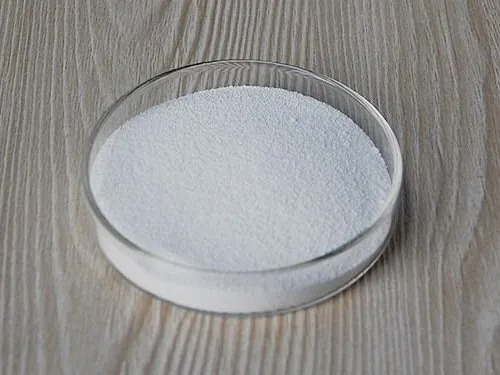
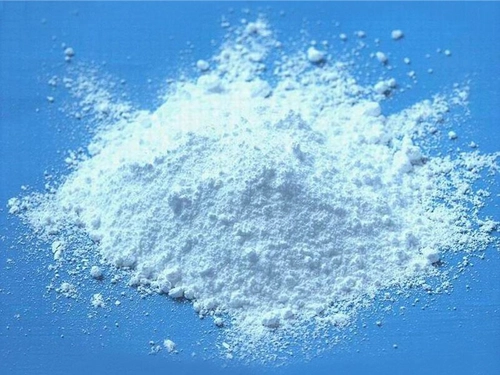
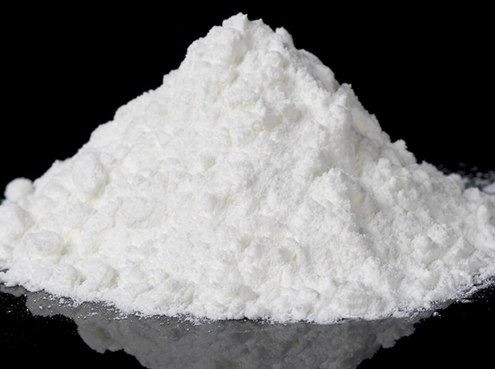
Powder and pellet prices should not be compared as though the physical form were irrelevant. PVDF powder may be selected for coatings or processes that depend on controlled dispersion and particle behavior. Pellets are generally more convenient for melt processing because they can be fed into suitable extrusion or molding equipment.
The correct form depends on the manufacturing route. Paying less for an unsuitable form may create higher costs later through unstable feeding, additional material preparation, rejected parts, poor coating performance, or unnecessary reformulation.
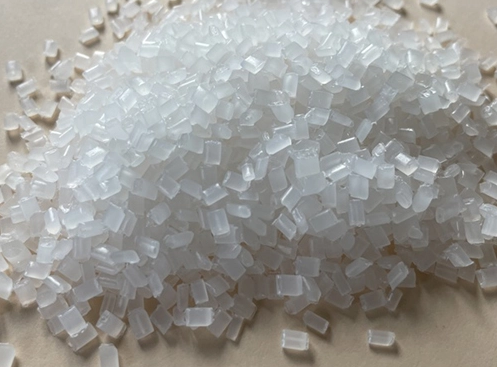
For example, the pvdf pellet SF-F22M is supplied as white, semi-transparent pellets. According to the grade data, its melting-point range is 165–171°C, while its melt flow rate is 1–5 g/10 min under the stated ASTM D1238 condition of 230°C with a 5 kg load.
These figures should not be treated as universal PVDF values. They are grade-specific data that demonstrate why buyers must compare test conditions as well as headline results. Two suppliers may report melt flow values measured under different loads or temperatures, making a direct comparison unreliable.
How Application Grade Influences PVDF Cost
A supplier cannot recommend the same PVDF grade for every application. Chemical-processing parts may prioritize chemical resistance, mechanical integrity, dimensional stability, and predictable melt processing. Wire and cable applications may place greater weight on electrical performance, insulation consistency, and extrusion behavior.
Coating applications depend on powder quality, dispersion, film formation, weathering performance, pigment compatibility, and the complete coating formulation. A resin that performs well in an injection-molded fitting may not be suitable for a high-performance architectural coating.
Battery-related purchasing can introduce another set of requirements, including batch consistency, contamination control, formulation compatibility, and supporting documentation. The term “battery grade” alone is not sufficiently precise. Buyers should identify the actual use, processing route, formulation conditions, and tests required for qualification.
This is why a broad request for “PVDF resin” often receives a broad price range. The more clearly the application is defined, the easier it becomes to remove unsuitable grades and compare realistic offers.
How Order Quantity, Packaging and Logistics Affect Quotations
Commercial conditions can change the total cost even when the resin grade remains the same:
Trial quantity: Small orders may carry a higher unit cost because material allocation, labeling, documentation, and shipment preparation still require fixed work.
Packaging format: Standard packaging is usually more economical than custom liners, labels, drums, or mixed pallet configurations.
Lead time: A planned order may fit normal production schedules, while an urgent order may require special scheduling or expedited transport.
Trade terms: FOB, CIF, and other terms assign freight, insurance, and handling responsibilities differently.
Destination requirements: Transport method, pallet rules, import documentation, and local delivery conditions may affect landed cost.
How to Compare PVDF Resin Suppliers
Price comparison is most useful when every supplier receives the same technical and commercial request. Review the recommended grade first, then confirm whether each quotation includes equivalent testing, documents, packaging, quantity, freight, and delivery terms.
A low quotation may exclude export packaging, special testing, freight, insurance, or technical support. A higher quotation may include services that the buyer does not actually need. The goal is not to choose the longest list of extras. It is to identify which items reduce production and supply risk for the intended application.
Buyers should also consider whether a supplier offers clearly separated product families for coating powder, molding pellets, extrusion grades, film grades, or other specialized uses. A structured grade range makes it easier to narrow down options before testing begins.
Consistent communication also matters. A useful supplier response should explain why a grade fits the application, which technical data are relevant, what must be tested during qualification, and which commercial conditions are included in the price.
What Information Should You Provide When Requesting a Quote?
To receive a useful quotation rather than a generic price indication, provide:
Application and finished product: Examples include a valve component, pipe fitting, film, cable layer, coating, or battery formulation.
Material form and process: State whether powder or pellets are required and identify extrusion, injection molding, coating, film production, or another process.
Technical targets: Include a reference grade, test standard, color, flow requirement, purity concern, and any critical performance target.
Commercial demand: Provide trial quantity, expected annual volume, order frequency, packaging preference, and required delivery date.
Delivery and documentation: Identify the destination, preferred trade term, required certificates, and any market-specific compliance request.
A reference grade can help the supplier understand the expected processing range, but it should not replace an application description. Two grades may appear similar on a short data sheet yet behave differently in the buyer’s equipment, coating system, or formulation.
Frequently Asked Questions
What is the main factor affecting PVDF resin price?
The selected grade is usually the starting point because it determines the processing range, material form, application fit, and testing requirements. Quantity, packaging, logistics, and documentation then shape the final quotation.
Is PVDF powder always more expensive than PVDF pellets?
No. The price depends on the specific powder or pellet grade, production requirements, order size, packaging, and application. Comparing only the physical form can be misleading.
Why do suppliers ask about the application before quoting?
The application helps the supplier identify the necessary flow behavior, material form, purity expectation, processing route, and documentation. Without that information, the quotation may be based on an unsuitable general-purpose grade.
Can I compare different PVDF offers by price per kilogram?
Only when the quotations cover equivalent grades, specifications, testing, quantities, packaging, trade terms, and delivery conditions. Otherwise, the lowest unit price may not represent the lowest usable or landed cost.
Why does a small PVDF sample order cost more per kilogram?
Sampling still involves material allocation, packaging, labeling, documents, and shipment preparation. These fixed costs are divided across a smaller quantity, which can increase the unit price.
What documents should I request with PVDF resin?
Common documents include a technical data sheet, safety data sheet, certificate of analysis, packing information, and relevant declarations. Additional testing should be requested when it is genuinely required by the application or target market.
Conclusion
PVDF pricing reflects more than the resin name. Grade, form, processing behavior, application controls, order size, packaging, documentation, and delivery terms all influence the final quotation. Define the application first, compare offers on the same basis, and evaluate usable landed cost rather than headline price alone.
References
PubChem, National Library of Medicine: Poly(vinylidene fluoride)
National Institute of Standards and Technology: Poly(vinylidene fluoride) Reference Material Data
Wikipedia: Polyvinylidene Fluoride